 Snowboard Binding Mounting Systems Explained
Snowboard Binding Mounting Systems Explained
Posted
by
Bianca Chang
on Thursday, November 6, 2025
When it comes to snowboarding gear, bindings are often overlooked, but how they attach to your board can make a big difference in both performance and comfort. Whether you're shopping for a new setup or simply curious about how to mount your snowboard bindings to your board, it's important to understand the different snowboard binding mounting systems available. From traditional 4x4 and 2x4 patterns to Burton’s 3D and Channel systems, each mounting style offers unique advantages. In this guide, we’ll break down each system so you can choose the right setup for your board and riding style.
The 4 Main Binding Mounting Systems
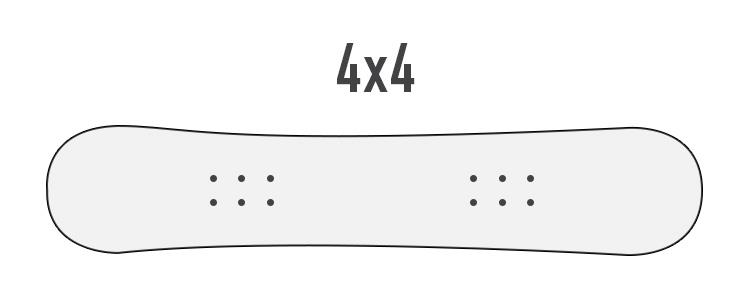
4x4
The 4x4 mounting pattern has pre-drilled holes in the board for securing snowboard bindings. This mounting pattern has two rows of screw holes, each spaced 4cm apart from one another and requires four screw to attach the binding baseplate. 4x4 boards usually have three holes per row, allowing for different stance widths and options to choose from. The 4x4 pattern was widely recognized as the standard mounting pattern for years until it was replaced by the 2x4 pattern. Now, it’s pretty uncommon to see the 4x4, but you can find it on some youth and specialty boards.
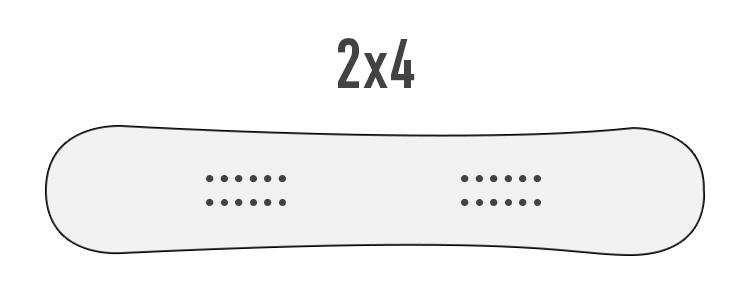
2x4
The 2x4 mounting pattern is the most common mounting pattern you’ll find today. Like the 4x4 pattern, the 2x4 has two rows of screw holes and uses 4 screws to secure the binding’s baseplate to the board. In each row, the holes are spaced 2cm apart and the rows are spaced 4cm apart from one another. Usually with the 2x4 pattern, each row has 6 screw holes. This creates more stance options than the 4x4 pattern, allowing riders to better fine-tune their stance based on their preferences.
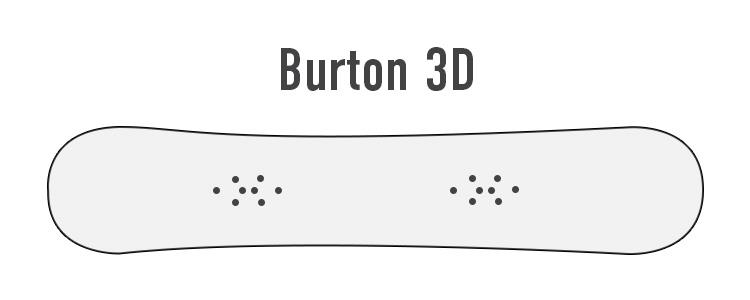
Burton’s 3D
The Burton 3D mounting system is Burton’s take on traditional mounting. Like the 4x4 and 2x4 patterns, Burton’s 3D uses pre-drilled holes for attaching the binding’s baseplate to the board. But a big difference with the 3D pattern is there aren’t rows of screw holes. Burton’s 3D mounting system uses a triangle pattern and 3 screws to mount bindings. Burton’s 3D system can be seen on earlier boards and has since been replaced by their Channel system, but it can still be found on some of their youth boards.
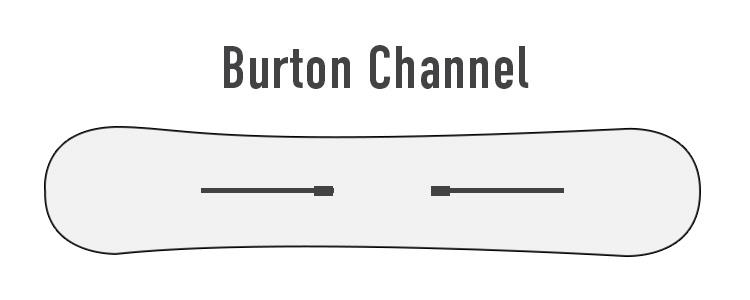
The Burton Channel
The Channel system is Burton’s current mounting system and the most different mounting system. It consists of two channels or slots, one for each binding to attach to. First seen in a limited mid-season release in 2007, the goal of Burton’s Channel system was to make mounting bindings easier and more adjustable. With the other screw mounting patterns, riders are limited to the given stance options. Also, dealing with multiple screws per binding can be tedious, especially when trying to make quick adjustments at the mountain. Burton’s Channel system simplifies things. With just two screws per binding, the slots of the Channel system allow for almost infinite possibilities in terms of stance width, centering, and setback on the board. It also made fine-tuning your stance super easy and changing bindings to another board a breeze.
During this time, Burton also developed EST bindings to work exclusively with The Channel. The Channel system plus EST bindings completely changed the feel between the bindings and board. Unlike other binding models, Burton’s EST bindings moved the mounting hardware from under the foot to either side of the bindings, eliminating the dead spot that the baseplate of traditional bindings creates. EST bindings create a better feel and performance by allowing snowboards to have a more natural flex.
It’s important to note that Burton’s EST bindings are only compatible with Burton’s Channel system since they do not use a traditional baseplate. Burton’s Channel system can work with traditional bindings. If your bindings don’t come with compatible discs, you can purchase them separately.
Bindings other than Burton’s EST bindings will be compatible with the 2x4 mounting pattern, and most bindings do come with compatible discs that work with Burton’s Channel system, but it’s important to always check the binding’s compatibility before you buy. Some older or lower-end binding models may not come with baseplates compatible with Burton’s Channel.
Each system, whether it’s the classic 4x4, the versatile 2x4, Burton’s unique 3D or Burton’s Channel system, has its own pros and cons. The key is making sure your bindings are compatible with your board and offer the adjustability and performance you need. Take the time to double-check compatibility and consider your stance preferences so you can spend less time fiddling with gear and more time enjoying the ride.
Categories:
Buying Guide
Tagged: How to Choose, Bindings