 Camber vs Rocker vs Flat: Which Snowboard Profile is Best?
Camber vs Rocker vs Flat: Which Snowboard Profile is Best?
Posted
by
Snowboards.com
on Monday, August 3, 2026
One of the biggest factors that affects how a snowboard rides is a snowboard's profile. It influences everything from how easy the board turns and how well it grips the snow to how stable it feels at speed and how effortlessly it floats through powder.
When you look at a snowboard from the side, you’ve probably noticed it’s not perfectly flat. The different curves of a board make what's known as the snowboard profile. The different combination, intensity, and placement of these camber and rocker curves gives each board its own personality on the mountain.
When it comes to choosing your next snowboard, understanding snowboard profile and the differences between camber and rocker make choosing a snowboard much easier. It not only affects how the board feels, but also how forgiving it is, what type of terrain it performs best in, and which snowboard length is the right fit.
Let’s break it down.
Camber
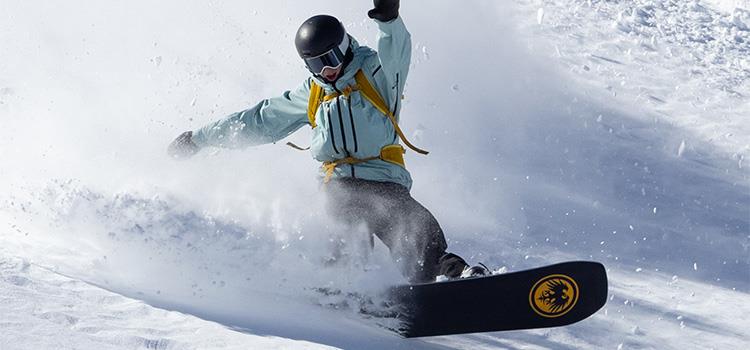
Camber is the traditional snowboard profile. When you rest the board on a flat surface, the center of a camber board lifts off the ground with contact points near the tip and tail.
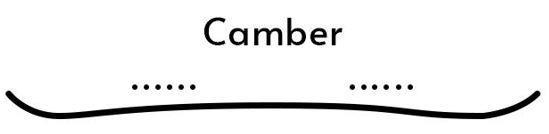
As soon as you stand on the board, your weight flattens the camber, and as you initiate that turn, you continue to push that camber, storing energy in the board. Similar to compressing a spring. As you move out of the turn and release some of that force, the board wants to return to its camber shape and releases energy, giving the board that pop and lively feel. The result is superior edge hold, a more responsive ride, and better stability while riding.
Camber also creates a longer effective edge, the portion of the snowboard’s edge that’s actually touching the snow. The longer the effective edge, the better grip it has on the snow, making camber boards the ideal choice for carving, riding hardpacked snow, and all-mountain riding.
Rocker
Rocker is essentially the opposite of camber. It’s the curve that brings the board down to the snow and lifts the ends, similar to the curve of the bottom of a rocking chair.
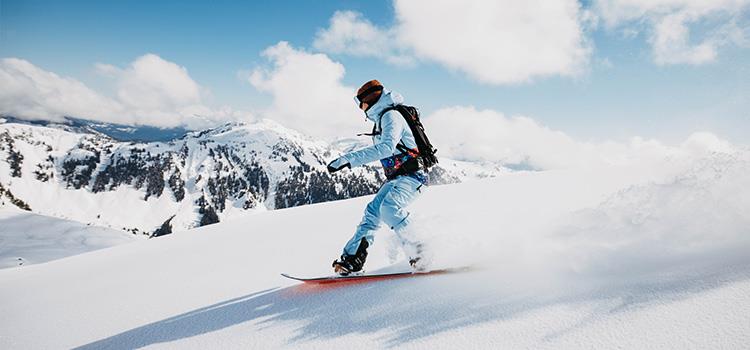
Rocker, also known as reverse camber, was introduced to the ski and snowboard world in the early 2000s. The result? A board that provides superior float in powder, easier maneuverability, and a more playful feel.
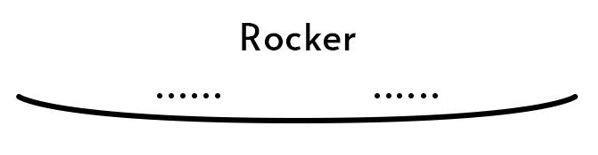
Rocker profiles naturally lift the ends of the board, causing the contact points to be closer together, creating a shorter effective edge. Less edge contact with the snow allows the board to pivot easier and is less likely to catch an edge unexpectedly. The trade off though, is that it can feel a bit less stable at high speeds and not grip as confidently in icy conditions compared to camber boards. But, the more playful and forgiving ride along with more float in powder makes rocker boards a popular choice among beginners, freestyle riders, and powder chasers.
Due to its shorter effective edge, many riders choose a slightly longer rocker board. The extra length adds a bit more stability while maintaining the playful, surfy feel rocker is known for.
Flat
Flat snowboards are as they seem, flat to the ground. They lack camber and rocker, and just have a slight rise at the tip and tail to prevent the ends of the board from catching. Flat boards are a good middle ground between camber and rocker boards. They still feel stable, balanced, and track well on groomers while remaining more forgiving than traditional camber. They don’t have as much pop out of a turn like camber nor have as much float as rocker, but provide a dependable middle ground across a range of conditions.
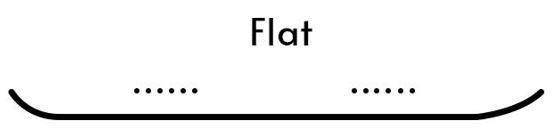
Flat snowboard profiles are common among softer freestyle boards, making it a great choice for those riding the park and hitting features. They’re also a solid choice for beginners, since it’s more forgiving of mistakes, and for all-mountain riders looking for something that will handle well in any condition.
Hybrid
Today you’ll mostly find hybrid profiles that combine camber and rocker throughout the board. The camber provides the edge hold and stability while rocker provides the maneuverability and float. Different boards have different amounts of camber and rocker and in different parts along the board depending on where and how they’re designed to ride.
The two common hybrid profiles are hybrid camber and hybrid rocker.
Hybrid Camber
Rocker/Camber/Rocker
Hybrid camber boards feature camber in the center of the board and rocker beneath both feet, towards the tip and tail of the board. With camber between the rider’s feet, the board feels stable and has solid edge hold and pop, similar to traditional camber boards. The added rocker makes it less “catchy” and more forgiving compared to full camber boards, and improves turn initiation and float in lighter snow. As a result, hybrid camber boards are a popular choice among all-mountain and freestyle riders.
Hybrid Rocker
Camber/Rocker/Camber
The opposite of hybrid camber boards are hybrid rocker boards. With rocker between the feet and camber towards the tip and tail, hybrid rocker boards have all the benefits of rocker, like a looser, more playful feel and easier turn initiation, along with a bit of the energy and stability that comes from camber. This combination makes boards more fun to butter and feel more stable when landing from jumps and tricks. So as you can guess, hybrid rocker boards are popular among park riders as well as all-mountain riders who want that playful, surfy feel.
With each type of hybrid board comes variations in terms of the amount of camber and rocker and the placement of each that affect board performance. For example, moving more of the camber towards the rear foot and more rocker towards the nose provides a better edge hold, turn initiation, and better float, giving a more directional feel.
Some snowboard manufacturers have developed their own board profiles like Burton's Flying V, which is Burton’s take on the hybrid rocker with more of a rocker profile with a small amount of camber under each foot. And Never Summer’s Triple Camber Hybrid and Recurve Triple Camber that places camber in three different locations throughout the board for more effective edge hold and pop while still having a solid float and playful feel.
Each snowboard profile is unique, giving the board its own personality. So a board that’s your buddy’s favorite doesn’t always mean it’s going to be your favorite. The right snowboard profile depends on your riding style and what you prioritize on the mountain.
Whether that’s maximum edge hold and carving performance, a more loose and playful feel, a board that can float endlessly through powder, or one that has the versatility to do it all, understanding how camber and rocker affect board performance and learning the different snowboard profiles available will help you choose the right snowboard that matches how you ride.
Categories:
Buying Guide
Tagged: How to Choose, Snowboard