 Snowboard Shapes Explained: Which Shape Is Right for You?
Snowboard Shapes Explained: Which Shape Is Right for You?
Posted
by
Snowboards.com
on Tuesday, July 28, 2026
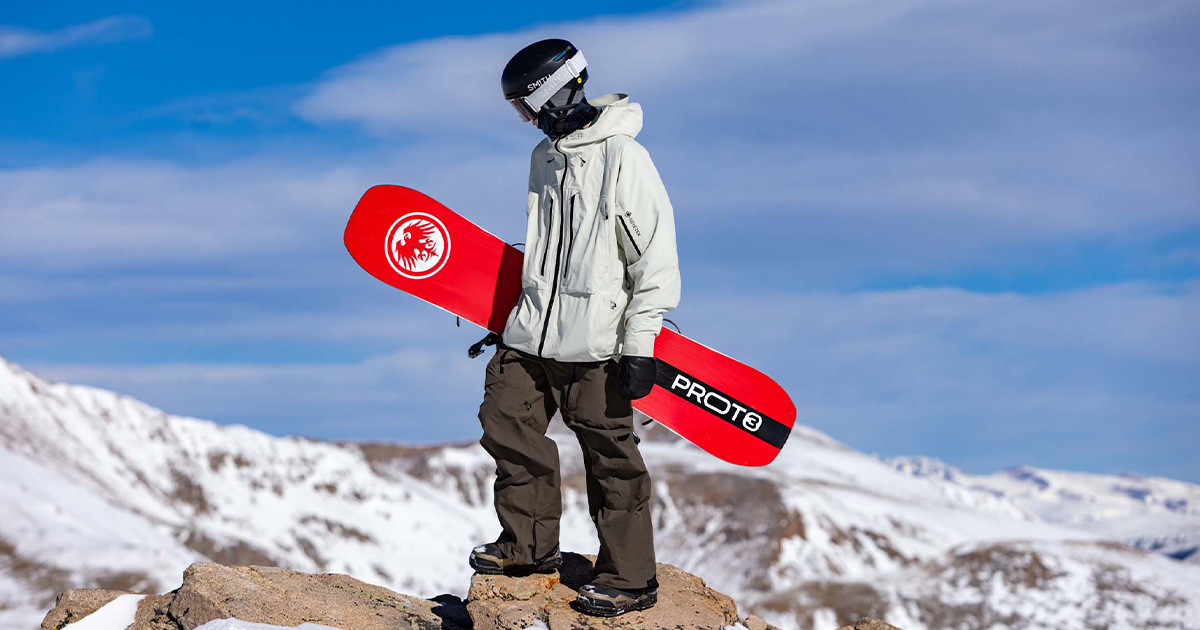
One of the most important decisions when choosing a snowboard is its shape. A snowboard's shape has a major impact on how it rides, affecting everything from carving and stability to riding switch, landing tricks, and floating through powder. While factors like camber profile and flex also influence performance, choosing the right snowboard shape is the foundation for finding a board that matches your riding style.
Whether you're shopping for your first snowboard or trying to decide between a directional vs. twin snowboard, understanding the different types of snowboard shapes will help you make a more confident choice.
Most snowboards fall into three primary categories:
Within those categories, you'll also find specialized variations like asymmetrical twins and tapered directional boards that fine-tune how a snowboard performs. In this guide, we'll break down each snowboard shape, explain who it's best suited for, and help you decide which one fits the way you ride.
True Twin Snowboards
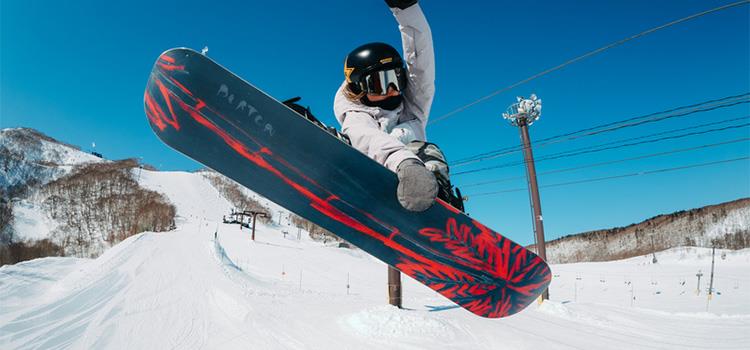
A true twin snowboard is completely symmetrical from nose to tail.
The nose and tail are the same length, width, and shape, with the bindings centered on the board. Because both ends are identical, the board rides the same whether you are riding regular or switch. This makes true twin boards easy to control when riding in either direction and feel balanced, which is ideal for throwing tricks and jumps in the park. The center stance improves overall board control and provides a more predictable feel.
They’re a common choice among freestyle and park riders because of their symmetrical, skate-like feel and are also popular among all-mountain and freestyle riders who use the whole mountain as their playground.
Reasons for choosing a true twin:
- Best shape for riding switch
- Great for the park and jumps
- Balanced and predictable feel
Asymmetrical Twin Snowboards
Asymmetrical twin boards are similar to true twins, but have at least one of these differences:
- Asymmetrical sidecut: meaning the sidecut of the heel edge is slightly deeper than the toe edge. This creates a tighter turn when on your heels than your toe edge.
- Different contact points: the contact points are the ends of the edge that actually touch the snow. With asymmetrical contact points, the heel edge usually has closer contact points than the toe edge, creating a shorter effective edge on the heel side than the toe side.
- Different flex patterns: a board can be designed to flex differently in different spots, usually a bit softer flex towards the heel side than the toe side.
Asymmetrical boards take into account how your body position is naturally different when on your heel side versus your toe side. As a result, an asymmetrical design creates a more balanced feel regardless of what edge you’re on. Like true twins, asymmetrical twin boards are popular among freestyle, park, and all-mountain riders.
Reasons to choose an asymmetrical twin:
- Balanced feel when riding switch
- Great in the park
- Improved turn initiation and more forgiving than a twin
Directional Twin
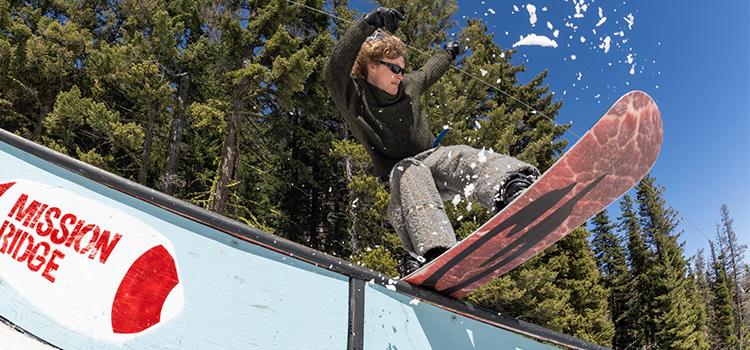
A directional twin snowboard takes the benefits of a true twin shape and mixes it with a directional feel. As a result, directional twin boards are one of the most popular and versatile snowboard shapes out there.
A directional twin typically has:
- A slightly longer nose than tail
- A centered or slightly setback stance
- Symmetrical edges in terms of sidecut and effective edge
- A similar flex pattern in the nose and tail
The board has a distinct direction it’s intended to ride the majority of the time, but it still rides well in both directions. Overall board stability and float are improved compared to a true twin thanks to its slightly setback stance and longer nose.
As a result, directional twin boards are a favorite for all-mountain riders who want the most versatility. They’re a popular choice among beginners who are still figuring out their stance and edges, but still highly sought after by experienced riders who want a board that can do it all.
Reasons to choose a directional twin:
- Extremely versatile
- Good switch performance
- Better float in powder than a true twin
- For all ability levels
Directional Snowboards
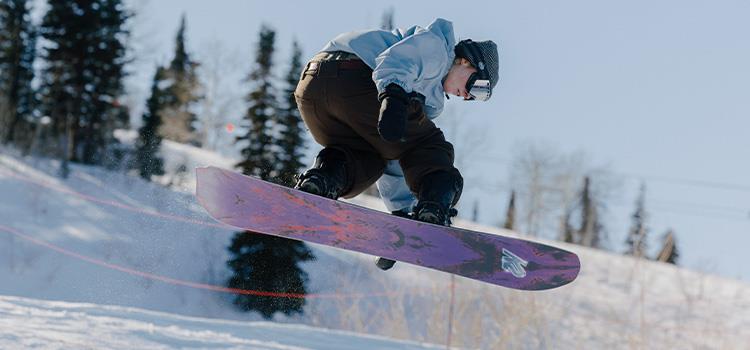
A directional snowboard is as it sounds, intended to ride primarily in one direction. It’s not symmetrical like a twin. It typically has a longer nose, shorter tail, and the stance slightly setback. Directional snowboards can also have a directional flex pattern, meaning the nose is slightly softer to absorb uneven terrain and float through snow while the tail is a bit stiffer for more power, stability, and control.
Directional boards are known for having better float in powder, smoother turn initiation, more stability at higher speeds, and good control in variable terrain. Overall, a more surfy feel. For the most part, directional boards are popular among advanced riders who prioritize riding fresh snow rather than the terrain park. Beginners and intermediates can also benefit from the predictable feel and easy turn initiation, but they lack the versatility twin boards offer.
Reasons to choose a directional board:
- Excellent float in powder
- Stable at high speeds
- Strong carving
- Smooth in variable snow conditions
Tapered Directional Snowboard
Tapered directional boards take the directional shape a step further. With the nose being the widest part of the board, tapered directional boards are superior in powder. The shape, plus the setback stance and stiffer tail, make the nose of the board naturally rise in soft snow and the tail stable and quicker through turns. The trade-off is that riding switch feels less natural, especially compared to twin-shaped boards.
Tapered directional boards are the best choice for those who want a dedicated powder board like freeride snowboarders who ride fresh snow, tree runs, and spend the day in the backcountry.
Reasons to choose a tapered directional:
- Best performance in powder
- Easy maneuverability in deep snow
There isn't one snowboard shape that's best for everyone. The right choice depends on where and how you ride.
If you spend most of your time in the terrain park, ride switch frequently, or enjoy a playful freestyle feel, a true twin or asymmetrical twin is likely your best option. Riders looking for one board that can handle groomers, side hits, occasional park laps, and powder days will appreciate the versatility of a directional twin. And if your goal is carving hard, riding fast, or chasing fresh snow, a directional or tapered directional snowboard will provide the stability, float, and control you're looking for.
Once you've narrowed down the right snowboard shape, you can further refine your choice by considering the board's profile, flex, width, and size. Together, these characteristics determine how the board feels on snow and help you find the perfect match for your ability level and riding style.
No matter your experience level, choosing the right snowboard shape will help you progress faster, ride more confidently, and get more enjoyment out of every day on the mountain.
Categories:
Buying Guide
Tagged: How to Choose, Snowboard