 Snowboard Flex Explained
Snowboard Flex Explained
Posted
by
Snowboards.com
on Wednesday, August 19, 2026
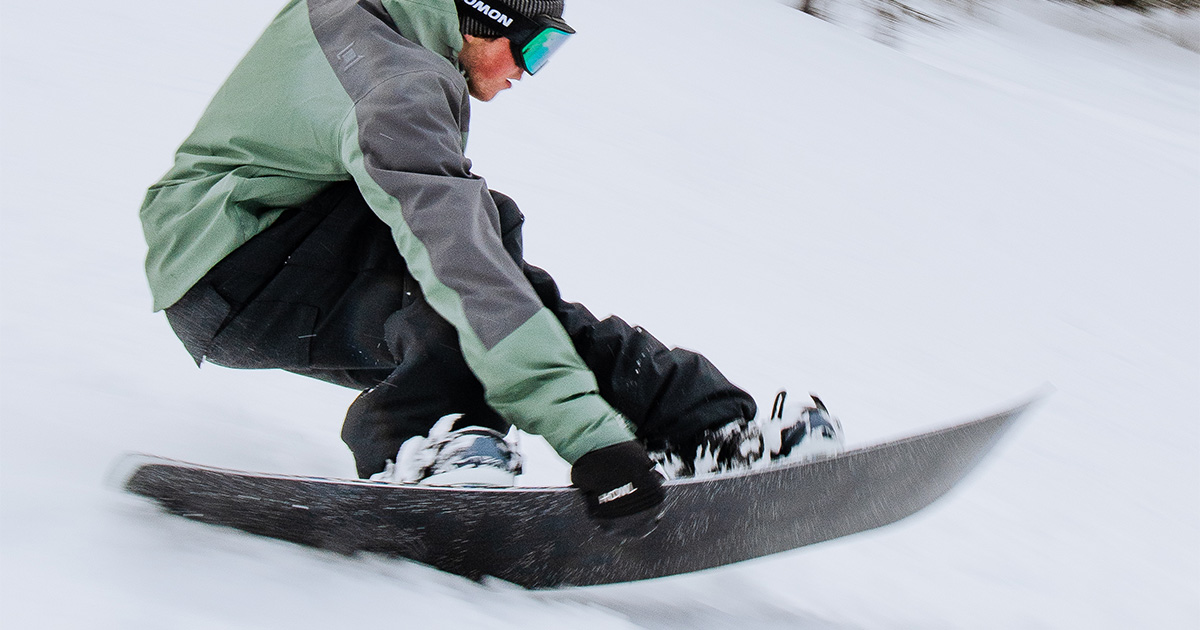
Snowboard flex is how a board bends under pressure. Each snowboard is designed with a specific flex pattern that affects how it turns, carves, pops, and handles different terrain.
There are two types of snowboard flex:
- Longitudinal flex (nose to tail)
- Torsional flex (edge to edge)
Longitudinal Flex
Longitudinal flex is what most think of when they hear snowboard flex. It describes how the board bends from nose to tail.
There are two primary types of longitudinal flex: progressive and continuous.
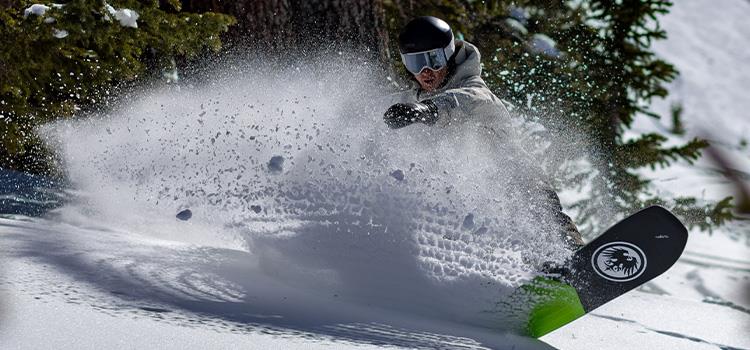
Progressive flex changes throughout the board. For example, a board can be stiffer in the middle between the bindings and softer in the tip and tail. This provides more stability but keeps presses and turn initiation easier. It can also be the opposite, softer between the bindings and stiffer at the nose and tail, giving a playful feel. It’s also common to have the center and the tail end of the board stiffer with a softer nose. This is common in freeride boards since this flex pattern improves float in powder while maintaining power and hold through turns. With a progressive flex, manufacturers can fine-tune how a snowboard performs, giving each its own unique personality.
A continuous flex has the same flex throughout the entire board. Instead of emphasizing one section of the board over another, a continuous flex creates a more consistent feel throughout the entire snowboard.
Torsional Flex
Though it’s not as commonly talked about, torsional flex also plays a big role in how a snowboard handles. The torsional flex is how much the board twists from edge to edge.
Boards with a stiffer torsional flex provide better edge hold, more stability at higher speeds, and more precision when it comes to carving. Boards with a softer torsional flex are generally more forgiving of mistakes, have quicker turn initiation, and are easier to maneuver, making them better freestyle and park boards.
Snowboard Flex Ratings
Most snowboard brands assign their boards a flex rating, usually on a scale of 1 to 10 or 1 to 5 or by labeling the boards soft, medium, or stiff.
It’s important to note that there’s not an industry standard for board flex, but it does help when comparing similar boards and boards within the same brand. Here's a general idea:
Softer-flexing snowboards are designed for riders who prioritize maneuverability, forgiveness, and a more playful feel, while stiffer-flexing snowboards are built for stability, speed, and precision through technical terrain.
What Flex to Expect with Different Types of Boards
Freestyle
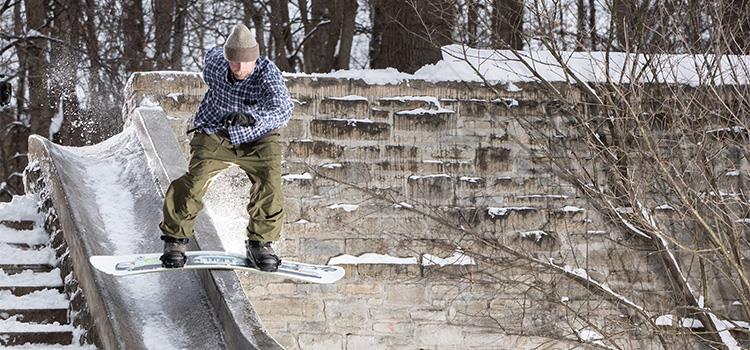
Freestyle boards tend to have a softer flex. A softer flex makes the boards easier to maneuver for hitting features and executing tricks. Because freestyle boards have a symmetrical true twin shape, their nose and tail are usually the same flex so it feels the same riding switch and during takeoffs and landings.
For more street and urban riding, softer flexing boards like a 1-2 are preferred since it makes presses and butters effortless when hitting smaller features. The tradeoff, though, is stability. At higher speeds or larger jumps, soft flexing boards can feel unstable and lack the support needed for aggressive riding.
For a solid, all-around park board that you can still ride the rest of the mountain comfortably, look for a flex rating around 3-6 for a soft to medium flex board. These boards are still soft enough for jibbing and hitting features while providing a bit more stability needed for larger jumps and faster riding.
Beginner park riders usually benefit from a softer, more forgiving board. While experienced park riders hitting bigger features and jumps usually prefer something a bit stiffer for more stability, but it’s all up to personal preference.
All-Mountain
All-mountain boards are the middle ground. They have the most versatility since they’re meant to ride anywhere on the mountain. From groomers to back bowls, tree runs, and some park laps, all-mountain boards can do it all. There’s a wide variety of boards in the all-mountain category, but you’ll mostly find boards with a medium, 4 to 7 flex rating.
A medium flex offers a good balance of stability and maneuverability while remaining forgiving and versatile. For most riders, especially those who spend their time resort riding, this is the ideal balance.
Freeride
Made for hitting big mountain and technical terrain, freeride boards are typically stiffer. A stiffer board in the 7 to 10 flex range provides superior stability, precision, and control at high speeds and in technical terrain. The added stiffness also reduces unwanted chatter and increases edge hold for a super responsive feel when carving and on steeper terrain.
You’ll find some freeride boards with a softer nose and stiffer tail. This design helps the nose of the board float more easily in powder while the tail maintains grip and control through turns.
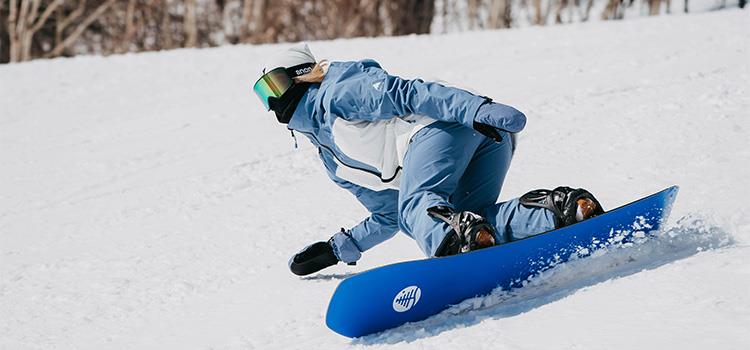
Does a Stiffer Board Always Feel More Aggressive?
For the most part, yes.
Stiffer boards tend to be more powerful, precise, and aggressive. Softer boards usually feel more playful, forgiving, and easier to maneuver. However, flex is only one part of the equation. A board’s overall personality and feel are influenced by a combination of factors including the board’s profile, sidecut, shape, construction, and materials. That’s why two boards with identical flex ratings can ride drastically different depending on how they’re designed.
How to Choose the Right Snowboard Flex
There are a few factors to consider when choosing the flex for your next snowboard: your ability level, weight, and riding style.
Ability Level
Beginners
Softer flexing boards are generally easier to learn on. The softer flex makes it easier to initiate turns, the board feels less demanding, and it's overall more forgiving when mistakes happen. And since most new riders spend their time riding at lower speeds, they won’t miss the added stability of a stiffer board.
Intermediate and Advanced Riders
As snowboarding skills improve, most move to a stiffer board for more control and better edge hold. More experienced riders often ride faster, carve harder, and encounter more challenging terrain, all situations where a stiffer flex shines.
Rider’s Weight
One of the biggest determiners when choosing snowboard flex is your weight.
Every board is designed to flex under a certain amount of force. If you’re on the lighter side, a board that is too stiff will be difficult to bend and, as a result, be difficult to control. On the flip side, if you’re on the heavier side, a board that’s too soft will feel like a noodle, not giving you the grip and response you need to ride comfortably. That’s why most manufacturers include a recommended size chart for each board. These recommendations take both the board’s length and flex into account when recommending the best weight range for that given board size.
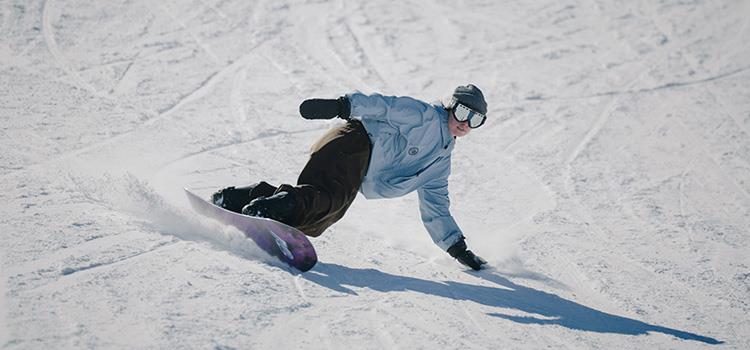
Snowboard flex has a major influence on how your board feels on snow, but there isn't a single "best" flex for every rider.
If you enjoy park laps and a more playful feel, you'll likely prefer a softer board. If your goal is carving groomers, charging steeps, or floating through powder, a stiffer board will provide the stability and precision you're after. And if you want one board that can handle just about everything, a medium-flex all-mountain snowboard offers the most versatility.
Most importantly, don't look at flex in isolation. Consider it alongside the board's profile, shape, and your own ability level and weight. Choosing a snowboard where all of those factors work together will lead to a board that feels balanced, predictable, and fun every time you ride.
Categories:
Skills & Advice
Tagged: How to Choose, Snowboard